Treatments
Endodontics
Root canal treatment: inflamed tissue is removed, and the canal is cleaned and filled.
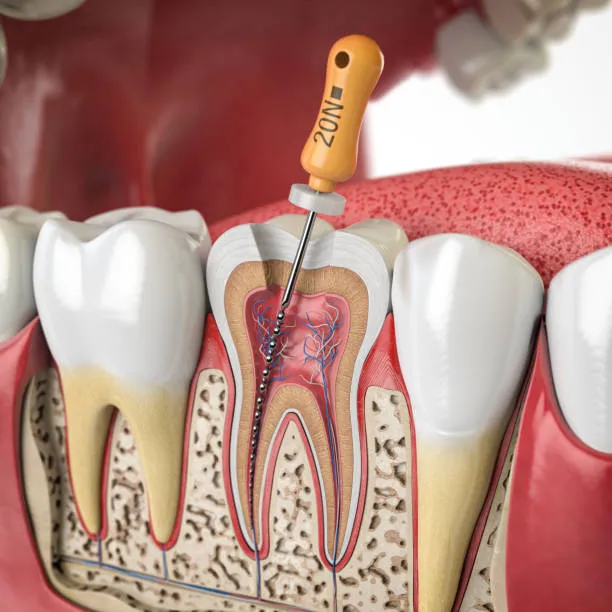
Root canal treatment: inflamed tissue is removed, and the canal is cleaned and filled.
In root canal treatment, the soft tissue inside the tooth is treated. This tissue — the pulp — contains nerves and blood vessels and runs from the crown to the tip of the root. If it becomes inflamed or dies, it is removed, the canals are cleaned and then filled. The tooth itself stays in place.
Inflammation inside the tooth usually occurs when bacteria reach the pulp: through deep decay, through a crack or fracture, or after a knock to the tooth. Possible symptoms include persistent pain, sensitivity to heat or cold that lingers, or swollen gums around the tooth. Sometimes there are no symptoms and the inflammation is seen on an X-ray. The dentist will assess whether this applies to you.
The tooth is numbed and kept dry. Through an opening in the crown, the canals are found, cleaned and shaped. They are then filled with a material that seals the space, and the tooth is closed again. The number of appointments needed, and the best way to restore the tooth afterwards, varies from one situation to another and will be discussed with you by the dentist.
After treatment, the tooth may be sensitive when biting for a while. A treated tooth is more brittle than a healthy tooth, and how best to protect it — with a filling or with a crown — depends on how much tooth tissue is left. The dentist will discuss what is needed in your situation.
This page gives general information about the treatment. It is not advice about your own situation: what applies to you will be decided by the dentist after an examination. If you have a question or a complaint, please call the practice on (0032) 089 44 02 01.
Stalenstraat 133, 3600 Genk
The map has not been loaded, because this would send your data to Google.
Leave a message or call the practice. We will get back to you as soon as possible.