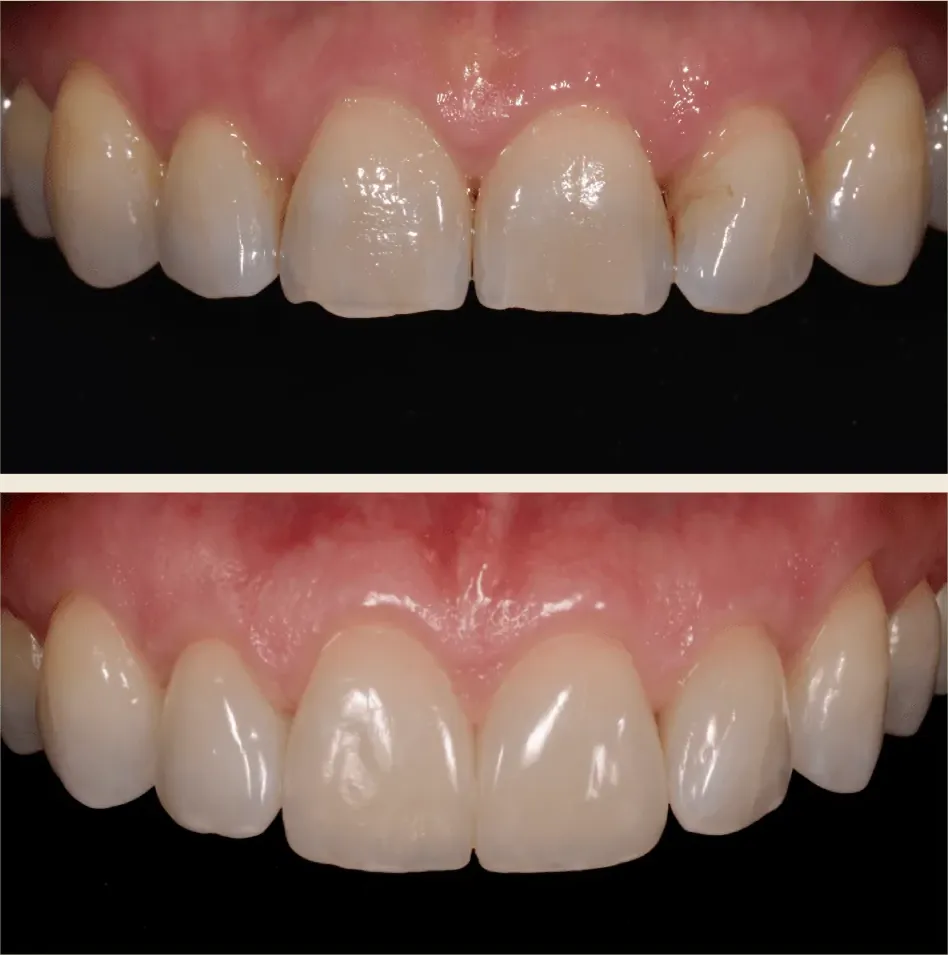
A veneer is a thin shell of porcelain or composite that is attached to the front of a tooth. It changes the colour, shape or apparent position of that tooth on the visible side. Porcelain is made in a laboratory; composite is usually built up on the tooth in the practice.
Veneers may be considered for discolouration that does not respond to whitening, chipped or worn edges, small alignment issues, or gaps between the front teeth. Whether a veneer is suitable depends on the condition of the tooth and gums; sometimes another solution is more appropriate.
First, the dentist discusses what you would like to achieve and checks whether it is possible. For porcelain veneers, a thin layer is usually removed from the front of the tooth, followed by an impression or scan, after which the laboratory makes the veneers. At a later appointment, they are tried in and bonded in place. Composite veneers are built up directly in the mouth.
A veneer will not change colour if you have whitening later, and composite can discolour over time or around the edges. Veneers can chip or come loose, especially if you grind your teeth. The dentist will discuss what this means for you and what maintenance is needed.
This page gives general information about the treatment. It is not advice about your own situation: what applies to you will be decided by the dentist after an examination. If you have a question or a complaint, please call the practice on (0032) 089 44 02 01.
Stalenstraat 133, 3600 Genk
The map has not been loaded, because this would send your data to Google.
Leave a message or call the practice. We will get back to you as soon as possible.